pir8g33k
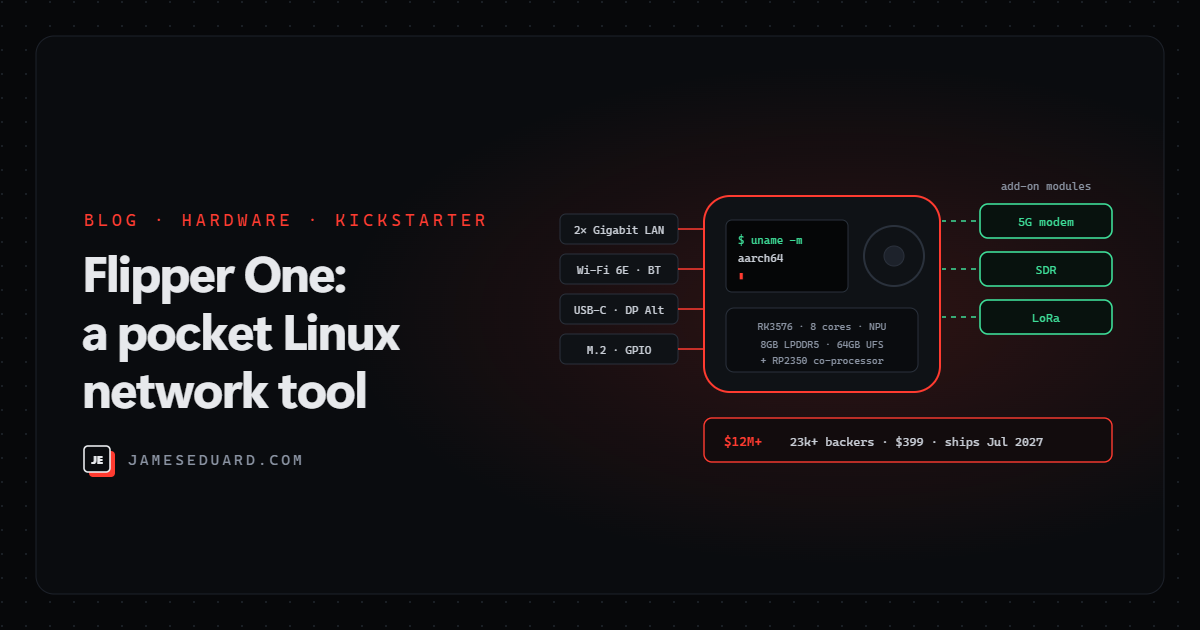
TL;DR: Flipper One is a new pocket Linux computer from the Flipper Zero team. It is built around networking: two Gigabit Ethernet ports, Wi-Fi 6E with monitor mode, and an M.2 slot for 5G, SDR or LoRa modules. The Kickstarter opened on 17 November 2026, passed $1M in about ten minutes and was over $12M from roughly 23,000 backers within two days. The early price is $399, and delivery is planned for July 2027. It does not replace the Flipper Zero, because it has no NFC, RFID or sub-GHz radio.
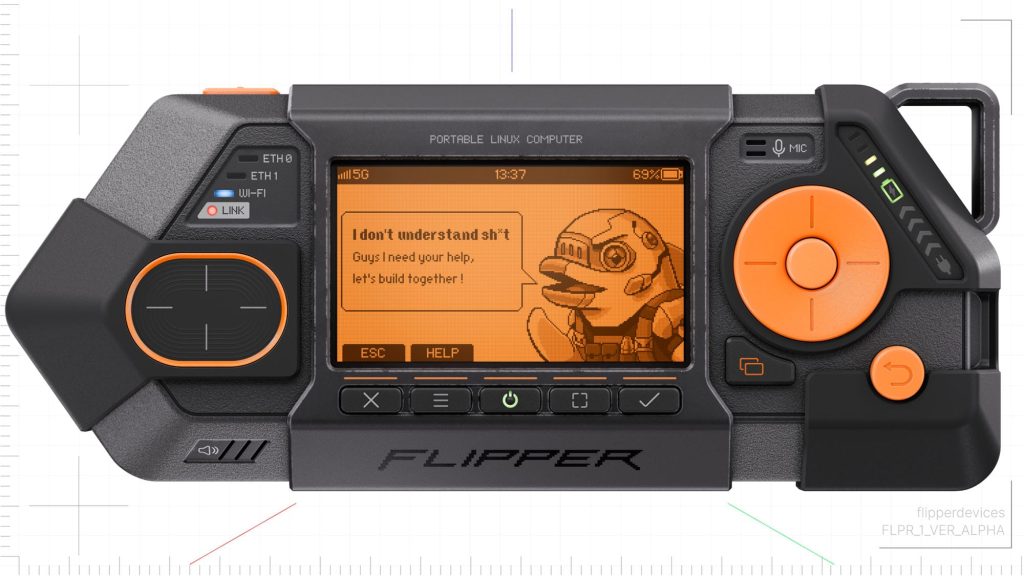
What Flipper One is (and what it isn’t)
The Flipper Zero is a microcontroller toy box for radio and access-control protocols. The Flipper One is closer to a handheld network appliance that runs full Linux. It has an 8-core Rockchip RK3576 SoC with an NPU, 8GB of RAM and 64GB of storage. A small RP2350 co-processor handles the screen, buttons, power and GPIO, so the device stays responsive while Linux boots or sleeps.
Think of it as a router, a network tap, a VPN gateway and a small Linux workstation in one device. It is not a pocket NFC cloner. If you are looking for a Zero 2, this isn’t it.
Specs at a glance
| Area | Flipper One |
|---|---|
| Main SoC | Rockchip RK3576, 8 cores, built-in NPU |
| Co-processor | Raspberry Pi RP2350 (UI, power, GPIO) |
| Memory / storage | 8GB LPDDR5, 64GB UFS 2.2 |
| Display | 256×144 grayscale |
| Wired network | 2× Gigabit Ethernet |
| Wireless | Wi-Fi 6E (MediaTek MT7921, monitor mode supported), Bluetooth 5.2 |
| Video out | HDMI 2.1, DisplayPort Alt Mode over USB-C |
| Expansion | M.2 Key B (2242/3042/3052, 2230 with extender): PCIe 2.1 x1, USB, SATA3, SIM/eSIM; GPIO header |
| Battery | 24Wh. Flipper quotes about 0.96W at idle (around a day) and about 4.5W as a router (5+ hours) |
| Not included | NFC, 125kHz RFID, sub-GHz radio, infrared |
What it’s actually for
- Multi-WAN router. Combine up to five uplinks (Ethernet, Wi-Fi, 5G, USB tethering) with failover or load balancing. This is handy for field work or events with bad connectivity.
- VPN and firewall in your pocket. Put it between an untrusted network and your laptop, and terminate WireGuard or another VPN on the device.
- Network scanner and passive sensor. With two Ethernet ports you can run it inline as a bridge, or connect it to a SPAN port and capture traffic. Wi-Fi monitor mode covers wireless surveys.
- Desktop mode. Plug in a USB-C dock and use it as a small ARM Linux box with a monitor, keyboard and mouse.
- One-cable admin. A single USB-C cable gives you charging plus a network link for SSH from your laptop.
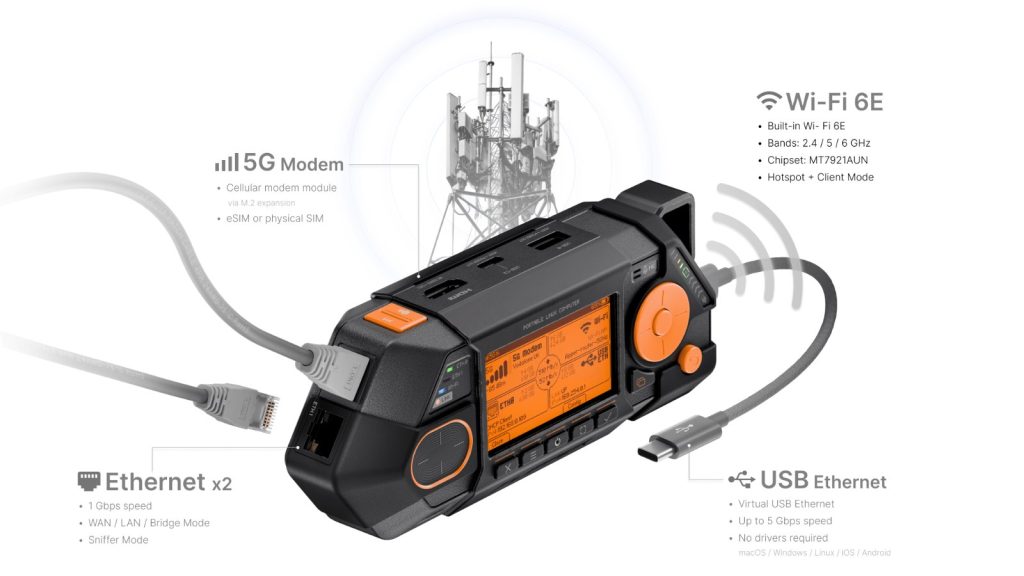
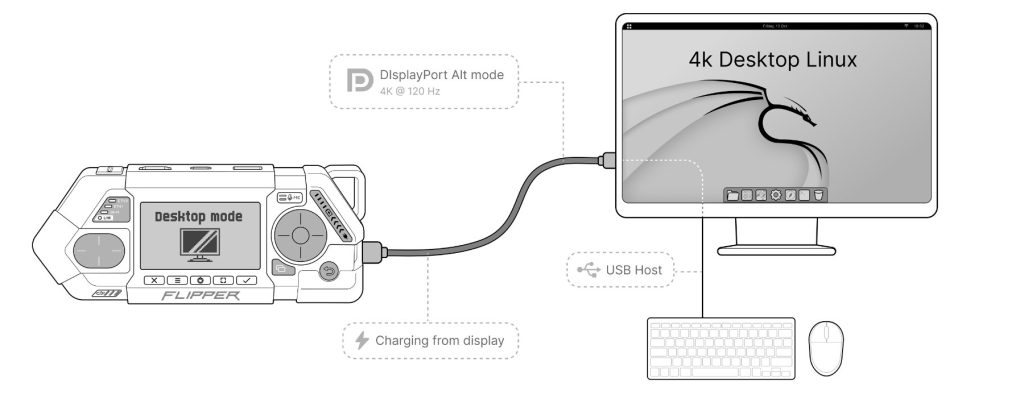
The software is Flipper OS, which is based on Debian and uses switchable “profiles” (for example router, scanner or desktop). Because it is ordinary Debian, the usual tools such as nmap, tcpdump, Wireshark (tshark), Kismet and WireGuard should work without vendor apps.
Modules and pricing
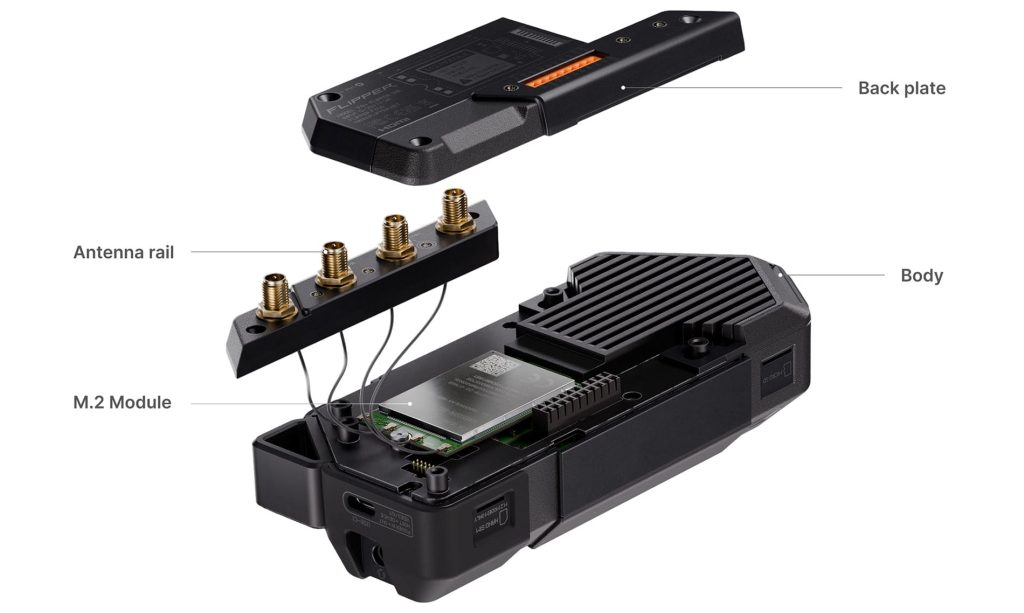
| Tier | Price (USD) | Notes |
|---|---|---|
| Early Bird | $379 | 1,000 units, sold out. $20 coupon holders also get $379. |
| Kickstarter Special | $399 | Base device |
| + LoRa bundle | $439 | LoRa module alone: $59 |
| + SDR bundle | $539 | SDR module alone: $149. Specs not final (preliminary range 24–1700 MHz). |
| + 5G bundle | $599 | 5G module alone: $219. eSIM works only with this module. |
| All modules | $759 | LoRa + SDR + 5G |
Flipper’s CEO has said a sustainable retail price is closer to $500. The $399 price applies to the first batch only, because memory prices have risen sharply.
The Kickstarter update
- Campaign window: 17 November to 17 December 2026.
- Launch: passed $1M in about ten minutes. The first-day total was reported at about €7.47M from 15,898 backers.
- Within two days: over $12M from roughly 22,000–23,000 backers. For comparison, the Flipper Zero raised $4.8M from more than 37,000 backers in 2020 for the whole campaign.
- Shipping target: July 2027. The campaign is on the third hardware revision, and Flipper says about 90% of the specs are final.
Software is still in progress. Collabora is working on upstream Linux support for the RK3576. Some parts don’t work yet: NPU acceleration, hardware video encoding, the CSI camera interface, PCIe suspend and OP-TEE. DDR memory training still uses a closed binary blob. The Flipper SIM and a satellite (NTN) partner are listed as “coming soon”. Back the project for what works today, not for what’s on the roadmap.
Should you back it?
Back it if you do network pentesting, run a home or SOC lab, work in the field or at events, and want a single device that can be a router, a VPN endpoint and a capture box, with a real Debian userland and enough Ethernet ports.
Wait if you want the Flipper Zero’s radio and NFC tricks, need the NPU or the SDR today, or don’t want crowdfunding risk. A Kickstarter pledge pays for a promise, not a product. Shipping dates on hardware campaigns often slip, even for teams that have shipped before. A GL.iNet travel router plus a Raspberry Pi 5 with a USB Ethernet adapter covers much of the same ground right now.
Responsible use
Inline bridging, traffic capture and Wi-Fi monitor mode are powerful. Only use them on networks you own or are allowed to test in writing. Capturing other people’s traffic without permission is illegal in most countries, whatever device you use.
Pre-pledge checklist
- Decide which tasks you need: router, capture, VPN or desktop. Skip the modules you won’t use.
- Check that the 5G module supports bands in your region before paying $219 for it.
- Budget for import taxes and shipping, which are not in the pledge price.
- Assume the delivery date may slip, and plan your lab around that.
- Follow the Collabora upstreaming progress if NPU or video features matter to you.
References
- Flipper One: Open Linux Multi-Tool (official product page)
- Flipper blog: Flipper One, we need your help (source of product images)
- Flipper One Kickstarter campaign page and launch press coverage (17–19 November 2026)
Facts as of 20 November 2026. Campaign totals change every day, and the SDR specs and software support are not final, so check the campaign page for current numbers.